
Organics Recycling
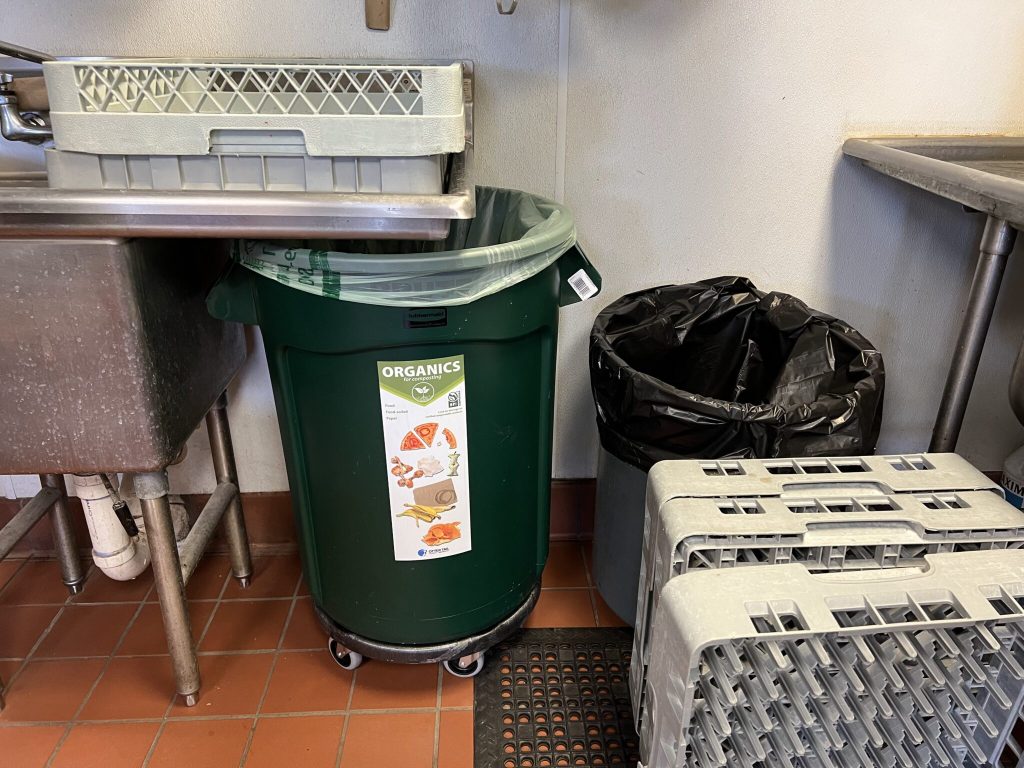
The Organics Recycling Pilot Program began in early 2022 and was made possible by a Greater MN Composting and Recycling grant from the Minnesota Pollution Control Agency. Organics Recycling takes food scraps and food waste and turns it into compost at a commercial composting facility. Organic waste is bagged, placed in carts, and picked up on a collection route. The collected material is brought to the Glacial Ridge Compost Facility near Hoffman, MN for processing. In the first year of the program, participants helped keep 260,000 pounds of food waste out of the landfill.
Why recycle organic waste?
Organic waste (food scraps and other compostable matter) makes up 25-30% of the waste stream, the largest portion after traditional recyclable materials. Organic matter in a landfill doesn’t decompose the way it would in nature, due to the oxygen-poor environment. If the material does decompose, it does so in a matter of decades instead of months, releasing methane gas from very slow anaerobic (oxygen-poor) decomposition. Landfilled food waste accounts for 14% of methane emissions in the United States, and is the single largest category of landfilled material (US EPA). Organic waste also causes problems at Waste-to-Energy facilities due to the heavy and wet nature of the waste.
What is accepted in the program?
- ALL food scraps, including meat, dairy, fish, and bones
- Food soiled paper such as napkins and paper tissues
- Certified Compostable Products such as cups, plates and utensils. Look for BPI certification when purchasing products you would like to compost.
Organics Recycling Program Participants
Composting Options for Residents
Individuals can do their part to reduce the impacts of wasted food and disposal of organic waste in landfills and waste-to-energy facilities by using a backyard compost bin or if backyard composting isn’t an option drop off your food waste at a Food Waste Drop-Off Site. Composting shrinks your garbage and your carbon footprint by turning food waste and other organic materials like leaves into nutrient rich compost that returns carbon and plant nutrients to the soil.