
Recycling & Waste Disposal
Get Started with Backyard Composting
Composting is the process of recycling organic materials (like food scraps, coffee grounds, yard waste and soiled paper products) into a nutrient-rich soil conditioner: compost. There are different methods or types of composting, so you can choose what works for you and your space. By composting you can decrease your waste, increase your soil quality and shrink your carbon footprint!
According to the Minnesota Pollution Control Agency (MPCA), organic material like food scraps makes up 31% of household waste. Landfilling organic material creates methane, a greenhouse gas that is around 26 times more potent than carbon dioxide. This happens when organics are sealed into an anaerobic environment (without air) and slowly decompose. The waste product of anaerobic decomposers is methane. US landfills create so much methane that if landfills were a country, it would be the third-largest greenhouse gas producing country in the world, behind only the US and China! Take steps to reduce food waste before you compost – then compost what you can’t eat.
Composting is pretty simple. It happens in nature all the time. If you simply pile your organic waste in a specific area, it will break down even if you ignore it. This might lead to smells or critters, so there are ways to compost that will look nicer, compost faster, and that won’t annoy your neighbors! The basic steps are simple, read on to get started!
Make or buy a bin
There are pros and cons to each design but depending on your skills, budget, and living situation, there is a bin for you! If you live in town, you will want a bin with a lid to keep things tidy and keep pests out.
DIY Bin Ideas:
- Free pallets, wired or nailed together into a square
- Chicken wire or woven wire, bent into a circle. Easy and cheap! Simply remove the wire, move to a new location, and fill again.
- Old plastic trash can with lid – drill holes for air flow. Strap the lid down and roll across the ground to mix your compost.
Buy a Bin:
It is often cheaper and easier to make your own! Many tumblers are too small, and don’t work very well (in our experience anyway!)
You can purchase a bin from the Solid Waste Department. Bins are generally available in late April and early May every year.
Many other options are available online: stationary bins, tumblers, balls, etc.
Tumblers: Most expensive, often smaller than is ideal. However, easier turning makes these a popular choice.
Balls: Round compost balls can be rolled on the ground to mix your compost, but they are very heavy when full.
Stationary bins: Usually the most affordable, and work well. Many have lids that latch or lock shut to keep pests out. Choose a larger size, as piles smaller than 3′ x 3′ x 3′ don’t compost as well.
Spring compost bin sale
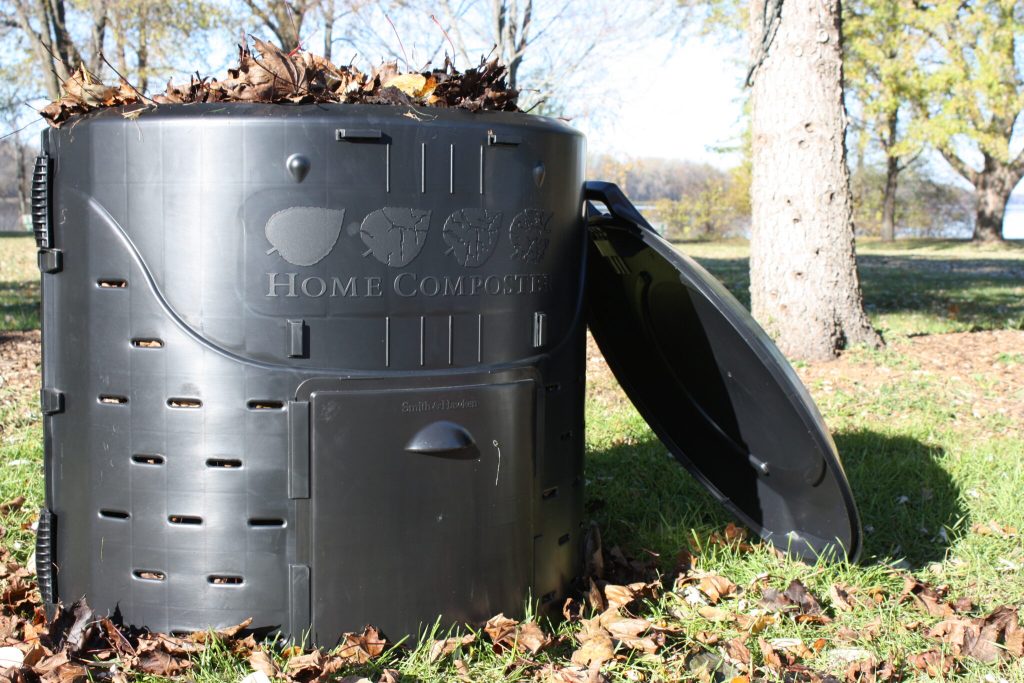
The Otter Tail County Solid Waste Department sells compost bins in the spring to residents. These bins are a large size, come apart for easy transport, and are an affordable way to start composting. Bins are generally available for purchase in late April and early May at Solid Waste Transfer Stations.
What to compost, what to avoid
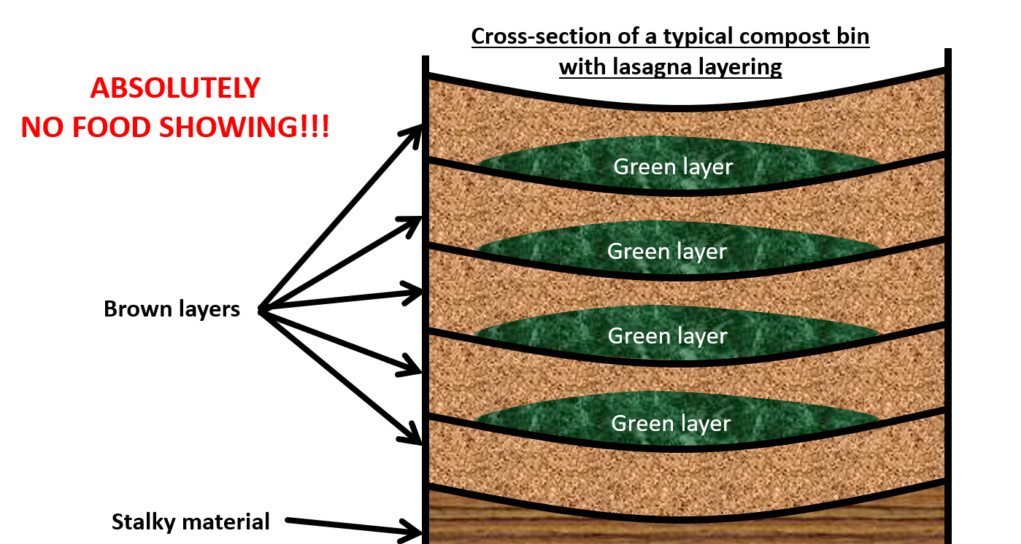
Once you have a bin set up you can start filling it up! Layer in dry ‘brown’ materials rich in carbon, alternating with smaller amounts of ‘green’ materials rich in nitrogen. Brown materials include dry leaves, wood chips, dry hay or straw, or shredded paper or cardboard. Green materials include plant based food waste, food scraps, and green grass clippings. Make sure each food waste layer is covered with dry materials – leaving food showing just attracts pests. Depending on how much food waste/scraps you have, filling up a bin could take from 2-6 months.
What to Compost
| Greens (higher in nitrogen) | Browns (higher in carbon) |
|---|---|
| Vegetable scraps | Dry leaves |
| Fruit peels/rinds | Shredded paper |
| Coffee grounds | Paper towels/napkins |
| Egg shells | Sawdust |
| Bread and other grains |
What NOT to Compost
Pest or disease infected or infested plant material
Meat, bones, fish or dairy products
Grease or oil
Weed or grass seeds
Turning or mixing compost
Depending on the size of your pile, and personal preference, you can turn your pile frequently, or almost never. Turning or mixing your pile will keep your pile aerated, and oxygen is important to ensure beneficial microorganisms thrive – this will help your pile get ‘hot’. If you have followed the ‘lasagna’ layering method shown above, you can choose to turn your pile a little while after you have filled your whole bin. Flipping and turning more often will help your material compost faster. However, if you don’t flip or turn your compost very often, you are still composting!
- Open a side, or pull off your whole bin if you have an enclosed bin.
- Use a combination of a shovel and a pitchfork to transfer the material either back into the same bin, or into a bin next to your primary bin.
- Check your compost – squeeze a handful to test for moisture. If it is soggy, slimy, and drippy, add extra layers of leaves or other dry material in between shovelfuls of compost. If it feels more dry and crumbly, water your pile with a hose after flipping it, or just let it rain on your pile. Generally, it is more common to have a stinky and slimy compost pile from having too much green material.
- Now you are ready to being layering again! It is best to have another bin next to your primary bin to flip your partially composted material into. This is why serious composters often use a three bin system. It is nearly impossible to ‘stir’ a full compost bin. Flipping it is much easier. Partially composted material won’t attract pests as much, so you can flip into an open bin or more rough bin (like a circle of chicken wire) and save your enclosed bin for layering in new organic waste.
Using compost
When your compost looks and smells like dirt, it’s done! You may still see bits of sticks or hulls from harder materials. It should no longer be identifiable as leaves or food waste. If it still smells like food waste, or has identifiable peels or cores, check for moisture, turn again, and wait a month or two longer. If you want to get rid of sticks and have a more consistent soil-like texture, you can screen your compost.

To use your compost
- For those who garden in pots, compost can be a useful component of your potting mix. (A mix of equal parts compost, topsoil and sand works well for most plants.)
- In a new landscape, flower bed or garden; mix up to 2” of finished compost into the top 6’ of soil.
- For yearly lawn maintenance, apply 1/4” -1/2” of screened compost as a top dressing in early spring.
- In established beds, apply up to 1⁄2” of compost once a year as a top- dressing in addition to your favorite natural mulch, maintaining 2”-4” of total mulch layer.
- Utilize a 50/50 mix of sifted compost and sand to fill in low spots or bare spots in your landscape to improve drainage and reduce erosion.
Compost troubleshooting
| Symptom | Problem | Solution |
|---|---|---|
| Pile is wet and smells like rancid butter, vinegar or rotten eggs. | Not enough air or too much nitrogen or too wet. | Turn pile and add straw or wood chips. Improve drainage. |
| Pile does not heat up. | Pile is too small or too dry. | Make pile larger or provide insulation; add water while turning. |
| Pile is damp and sweet smelling, but will not heat up. | Not enough nitrogen. | Add nitrogen: mix in grass clippings, food scraps, coffee grounds. |
| Pile is attracting animals. | Pile contains meat or dairy products or food scraps are not covered well. | Enclose pile in 1/4” hardware cloth; cover food with brown materials: wood chips / leaves. |