Waste Audit Reports
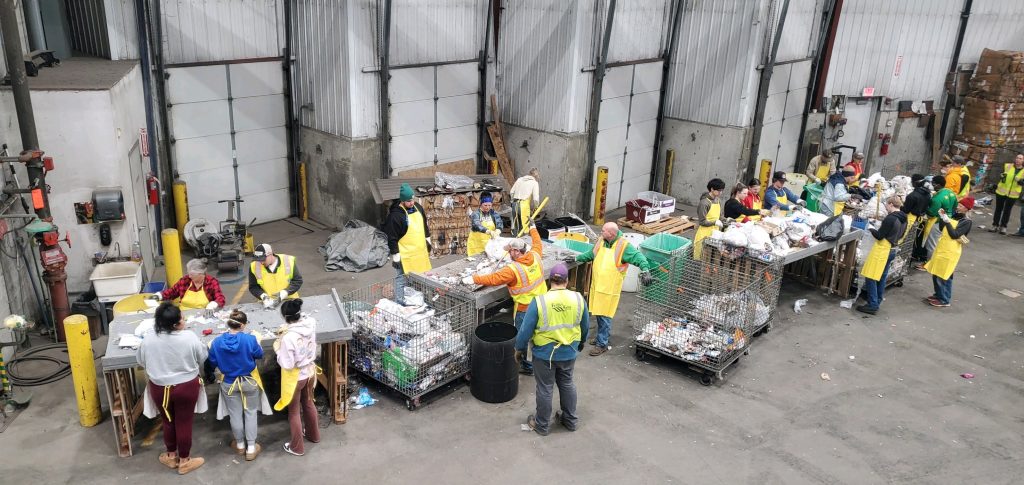
Since 2015, Otter Tail County Solid Waste Department has conducted five waste audits of Fergus Falls’ residential municipal solid waste (MSW). This involves sorting through approximately 3-4 tons of garbage, separating out and weighing recyclables, household hazardous waste (HHW), organics, and scrap metal. The purpose of these audits is to determine what types of waste residential MSW is composed of, and to use that information to help the county focus education and outreach efforts regarding solid waste disposal. Each waste audit took place on the same day of the year, in December of 2015, 2017, 2019, the week following Thanksgiving in 2021, and the second week of December in 2023.
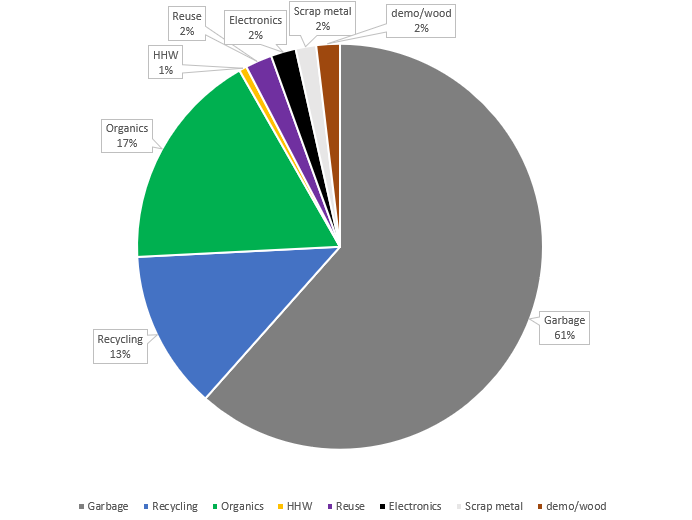
The data show that in general the recycling portion of the waste has stagnated at 12-15% of the total weight, after a dramatic decrease in 2017 following the implementation of single sort recycling in Fergus Falls. In general, single sort recycling has led to increased volume and participating in the recycling program, but there continues to be room for increased capture of recyclables.
Key takeaways from the 2023 waste audit
- Reduced percentage of food waste in the waste stream. As a result of the high percentage of food waste in the waste stream in the 2019 and 2021 waste audits, more energy and resources were applied to food waste and composting programming over the past several
years. It is possible that the reduction in food waste seen in 2023 is due in part to these efforts, which included a backyard composting program for 500 Otter Tail County residents (that provided a compost bin at no charge to residents), the sale of 200 additional backyard
compost bins in other years leading up to 2023, an increase in education and public information around the issue of food waste, and a the installation of a Food Waste Drop-Off site in Fergus Falls in March of 2023. Food costs also rose substantially over the past two years, so it is also possible people are shopping more carefully and wasting less. - Continued missed opportunities for recycling, comparable to previous years. The percentage of recycling that remains in the waste stream since 2017 continues to hover between 10-15% of the total waste sorted. This may represent the residents that are not likely to recycle despite access and information. Recycling education is ongoing in schools, on social media, and in mailed and online platforms, so lack of information is not thought to be a barrier to further increases in participation.
- Participant observations highlighted the pervasiveness of film plastic packaging in this years audit. Visually, a very large proportion of the waste after recycling and organics was removed was plastic bags, including pet food bags and food packaging. This would be an interesting waste category to focus more on in the future.
- Although the amount of organics was less than previous years, per household waste generation was fairly consistent with past audits with the exception of 2021. As previously indicated, the 2021 waste audit was an outlier due to occurring the week after the Thanksgiving holiday, which demonstrated that increased waste occurs during major holidays.
Past waste audits
Contact Information